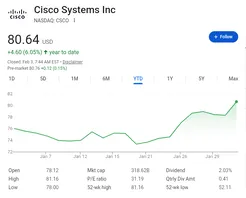
Silver hits $120 this morning.
The video "TRUMP INVOKES DEFENSE ACT: Silver $120! (SALES HALTED?)" from the "Financial Exposures" YouTube channel provides an urgent analysis of the silver market as of January 29, 2026. With silver hitting $120 per ounce—a 274% increase in just one year—the presenter argues that the market has transitioned from a standard commodity rally into a government-controlled strategic event driven by national security imperatives.
The Legal Framework of Government Control
The central theme of the video is the activation of the Defense Production Act (DPA) for silver. According to the source, the legal infrastructure for this takeover was built over the previous year through a series of executive orders. In March 2025, President Trump signed Executive Order 14241, invoking DPA Title 3 for "Critical Minerals". This was followed by a May 2025 waiver that removed the $50 million congressional approval cap for strategic spending, allowing billions to flow into material purchases without public debate.
By November 2025, silver was officially designated a "critical mineral," and a January 2026 executive order authorized the Secretary of Defense to use enforcement actions to secure supplies. This framework is funded through the Development Finance Corporation (DFC), which utilized a January 2025 National Energy Emergency declaration to bypass normal legislative oversight.
Mechanics of the Defense Production Act
The video explains three primary DPA titles that are currently being utilized to redirect the silver supply chain away from civilians:
- Title 1 (DPAS Priority Ratings): These ratings make government contracts mandatory for mines and refineries. Private customer orders are deprioritized or delayed, and refusal to comply can result in facility seizure.
- Title 3 (Offtake Agreements): The government can sign contracts that lock up future mine production for years in exchange for financing. This prevents silver from ever reaching the public market.
- Title 7 (Mandatory Reporting): Private companies are now legally required to disclose their inventory levels, production capacity, and customer lists to federal authorities.
National Security and Strategic Vulnerability
The urgency behind these measures stems from silver’s critical role in modern warfare and the United States' extreme supply vulnerability. The video notes that the U.S. depleted its strategic silver stockpile in 2002 and is now 64% to 80% dependent on imports. Compounding this risk is the fact that China controls 60% to 70% of global silver refining capacity.
The military necessity for silver is immense: Tomahawk missiles contain between 10 and 500 ounces each, while Virginia-class submarines require tens of thousands of ounces for electrical and weapons systems. With China implementing new export restrictions as of January 1, 2026, the U.S. government has been forced to act to ensure defense contractors can rebuild munitions stockpiles that would otherwise be exhausted in less than a month of active combat.
The Global Price Disconnect
The source highlights a massive decoupling between "paper" silver prices in New York and physical markets globally. While the New York price sits around $118, the Shanghai physical market is trading at $131, reflecting a $13 premium. Other regions show even higher premiums, with China at 100% over paper prices and Japan at 60%.
The video reports that domestic dealers are effectively sold out of standard products like Silver Eagles because wholesale suppliers are reserving inventory for potential government priority orders. Furthermore, silver lease rates have spiked to 8%, indicating that physical metal is so scarce that banks and refineries are unwilling to let it leave their vaults.
The Mathematical Deficit
The presenter argues that this crisis was inevitable due to five consecutive years of structural deficits. In 2025, global mine production (835 million ounces) failed to meet the combination of massive industrial demand (600 million ounces for solar, EVs, and AI) and investment demand. The cumulative deficit from 2021 to 2025 reached 820 million ounces, effectively draining above-ground stockpiles. As China’s new licensing requirements block approximately 120 million ounces from the global market annually, the math points toward a "negative available supply".
Future Scenarios and Action Plan
The video outlines three potential scenarios for the remainder of 2026:
- Voluntary Cooperation (20% probability): The government uses subsidies and high-price buybacks (up to $150/oz) to encourage holders to sell to strategic reserves.
- Allocation Controls (60% probability): A two-tier market develops where military needs get instant delivery while civilians face months-long delays and export/import licensing hurdles.
- Emergency Acquisition (20% probability): Under an acute crisis, the government could nationalize the market, freeze civilian sales, and implement hoarding penalties.
For investors, the video’s advice is clear: prioritize physical metal over paper assets like ETFs (e.g., SLV), which carry "cash settlement risk" if the government prioritizes physical delivery for defense. The presenter concludes that the DPA is not a theoretical power but an active policy being executed to secure a metal that has become more valuable for its strategic utility than its monetary price.